
Inside MLB's ABS Challenge System: The Cameras, Communications, and Networks Behind Baseball's Most Exciting New Technology
12 Hawk-Eye cameras per stadium. Plus or minus one-tenth of an inch. Results on the Jumbotron in 13.8 seconds. Here is how all of it actually works.

Inside the MLB ABS Challenge System: The Cameras, 5G Network, and Real-Time Infrastructure Behind Baseball's Biggest Tech Upgrade
12 Hawk-Eye cameras per ballpark. A private 5G network across 30 stadiums. Results delivered simultaneously to the Jumbotron and every TV screen in the country in 13.8 seconds. Here is how the infrastructure actually works.
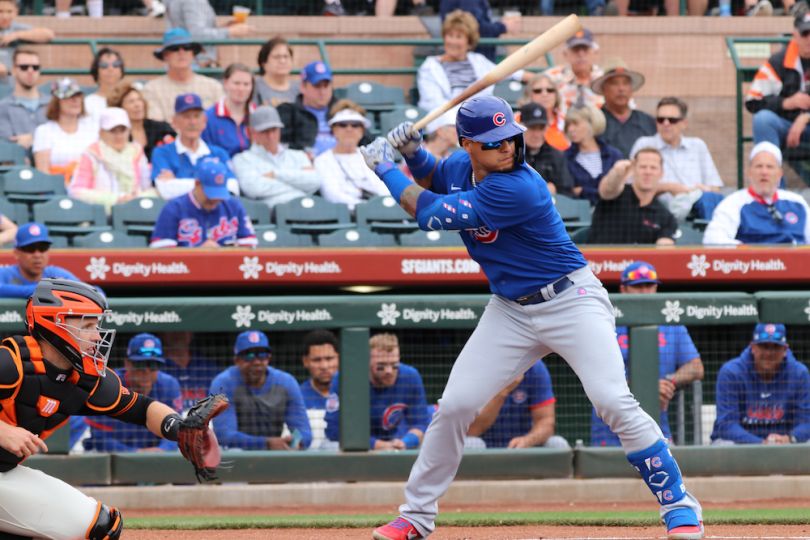
On March 25, 2026, Jose Caballero of the New York Yankees tapped his helmet after a borderline strike call in the fourth inning of Opening Night. Within roughly 14 seconds, 40,000 fans at Oracle Park, a national Netflix audience, and every analyst in both dugouts watched a real-time animated pitch graphic appear on the Jumbotron and broadcast simultaneously, showing the ball's exact path through a virtual strike zone calibrated to Caballero's measured height.
The call stood. But the engineering behind those 14 seconds is the story worth telling.
The Automated Ball-Strike Challenge System, known as ABS, is the most sophisticated real-time camera and network infrastructure ever deployed across 30 venues simultaneously in professional sports. It is built on three layers: optical camera hardware that tracks a baseball to one-tenth of an inch, a private 5G network that carries the result faster than the crowd can react, and a display system engineered to reach every screen in every stadium and every home in the country at the same instant. This is a breakdown of all three layers, and what they tell us about building infrastructure that cannot fail at the moment it matters most.
What Is the MLB ABS Challenge System?
Quick answer: The ABS Challenge System (Automated Ball-Strike) lets MLB players challenge a home plate umpire's ball or strike call using 12 Hawk-Eye cameras and a private 5G network. Results appear in approximately 13.8 seconds simultaneously on the Jumbotron and every TV broadcast. Each team gets 2 challenges per game, retained if successful. It debuted in regular season play on March 25, 2026.
ABS is not a full robot umpire system. Human umpires still call every pitch. ABS activates only when a player initiates a challenge. The system was designed this way after years of minor league testing showed that full automation was rejected by players and fans, largely because it eliminated pitch framing, the catcher's craft of receiving borderline pitches to influence the umpire's read of the zone.
The challenge system is the compromise: optical camera precision deployed in service of the human call rather than replacing it. Hawk-Eye cameras have been installed at all 30 MLB ballparks. T-Mobile's private 5G Advanced Network Solutions network connects all 30 venues. And the entire result pipeline from pitch crossing the plate to graphic on-screen runs under 15 seconds, consistently, across every game in every city for a full 162-game season plus playoffs.
The Camera Infrastructure: 12 Hawk-Eye Units Per Ballpark
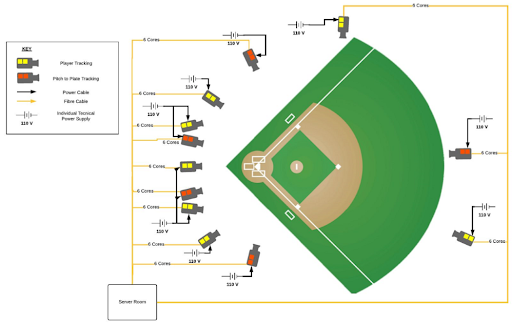
Quick answer: Each MLB ballpark has 12 Hawk-Eye cameras (a Sony company) installed throughout the structure. Five are high-frame-rate pitch-tracking units running at up to 300 frames per second, pointed at the corridor between the mound and home plate. Seven run at 50 fps covering the full field for player and batted-ball tracking. All 12 feeds synchronize to produce ball location data accurate to plus or minus 0.1 inch on every pitch.
These are not broadcast cameras. They are compact optical sensors purpose-built for machine vision, mounted throughout the stadium: in catwalk fixtures, on press box overhangs, on stanchions behind home plate, along the upper deck fascia. Their lenses point not at the action for human enjoyment but at specific, calibrated zones of the field, each one seeing a precise slice of the pitch corridor or the outfield from a different angle. The 12 angles are combined in real time to produce a single, geometrically precise three-dimensional position of the ball at every frame.
Hawk-Eye's approach is fundamentally different from the radar systems it replaced. Radar inferred ball position from changes in velocity — it detected when the ball started slowing down and extrapolated backward. Hawk-Eye cameras literally see the release. They detect the moment the seam clears the fingertips, track the full flight path, measure spin rate and axis directly, and calculate the precise location at the moment the ball crosses the center plane of the plate. This data has been captured on every pitch at all 30 ballparks since 2020, generating the Statcast database that teams, broadcasters, and analysts rely on every day.

All 12 cameras synchronize to produce ±0.1-inch ball location data on every pitch. Based on Hawk-Eye Innovations MLB deployment specifications.
The Network: Private 5G Across 30 Stadiums
Quick answer: The ABS Challenge System transmits over a private 5G network from T-Mobile Advanced Network Solutions — not public consumer 5G, but a dedicated enterprise network deployed specifically at each MLB ballpark. This carries the challenge result simultaneously to the stadium Jumbotron and the national TV broadcast in an average of 13.8 seconds.
This distinction matters. T-Mobile's private 5G ANS is an enterprise solution, a dedicated sliced network designed for mission-critical applications where latency, reliability, and security are non-negotiable. It is the same class of technology deployed in hospitals, manufacturing facilities, and military installations where the network going down is not an option. At MLB stadiums, its job is to carry a specific, time-sensitive payload: a 3D rendered pitch animation, to two endpoints simultaneously, in under 15 seconds, on every challenge, in every game, across every venue for an entire season.
The data flow is carefully sequenced. Hawk-Eye cameras capture the pitch continuously and process tracking data locally at the ballpark. The challenge determination is computed on-site. The result graphic is rendered on-site. Only then does the result travel over 5G to the Jumbotron infrastructure and the broadcast signal chain in parallel. Local computation eliminates the round-trip latency that would otherwise slow the result. The bottleneck is engineered out before it can form.
Think of it like a managed network with hard QoS policies: the critical payload gets a guaranteed dedicated lane, local processing eliminates the round-trip, and the architecture is designed so no single point of failure can delay the answer. That is not baseball engineering. That is network engineering.
MLB also built intentional delays into public-facing data. Gameday pitch location is delayed approximately five seconds. The broadcast pitch-zone graphic carries a nine-second delay. Both are deliberate security measures to prevent any player from using a real-time data feed to decide whether to challenge before the umpire completes the call. The delay is part of the design. When a challenge is initiated, the full-resolution local data fires immediately. The public-facing delay keeps the game fair.
The Display System: Jumbotron to Living Room in 13.8 Seconds
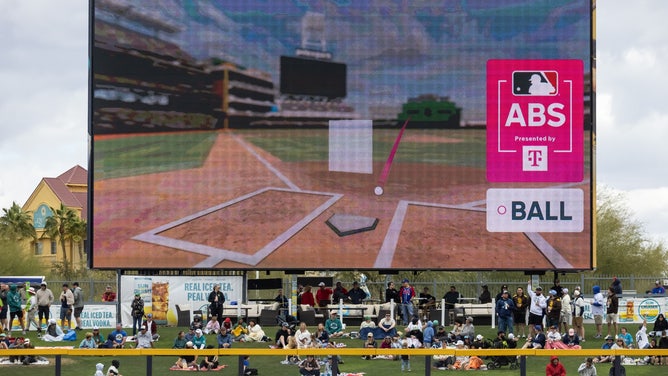
The non-negotiable design requirement for the entire system was simultaneity. The fan in Section 302 and the fan watching on TV in another state had to see the same graphic at exactly the same moment. Not close. Exactly. Any gap creates an information advantage for people who can see a screen that the player on the field cannot. The 13.8-second average result time is not a speed record. It is a carefully engineered pipeline that respects the game while delivering precision that was previously impossible.
When a player taps their helmet, the local Hawk-Eye processing system immediately pulls stored tracking data for that specific pitch, runs it against that batter's height-calibrated strike zone, renders the animated pitch graphic, and sends two parallel outputs over the private 5G network: one to the stadium Jumbotron control system and one into the broadcast signal chain. Both arrive at effectively the same moment. The crowd and the TV viewer react together.
In 2025, 63.2 percent of all MLB ejections resulted from ball-and-strike disputes. ABS does not eliminate the human call. It gives the human call a check. The technology is in service of fairness, not replacement.
In MLB's own survey during 2025 spring training testing, 72 percent of fans who watched an ABS challenge said the system improved their experience. The moment a player taps their helmet, the entire stadium shifts into attention. That reaction is the direct result of a display architecture engineered to be public, immediate, and identical for everyone simultaneously.
Who Can Challenge, and What Is the Success Rate?
Quick answer: Only the pitcher, catcher, or batter can challenge. Managers cannot. The player must tap their helmet within 2 seconds without dugout assistance. About 53% of all challenges succeed. Catchers lead at ~56%, batters at ~50%, and pitchers at ~41%.
| Challenger | Overturn Rate | Why |
|---|---|---|
| Catcher | ~56% | Best vantage point to the plate; sees the full pitch path |
| Batter | ~50% | Direct physical sense of where the pitch crossed their body |
| Pitcher | ~41% | Modern follow-through mechanics leave pitchers poorly positioned to read exact plate location after release |
A team deciding whether to use a challenge in the third inning is making a real-time strategic calculation with limited resources. Save it for the eighth inning with runners on, and an early wrong call might cost runs. Use it early, and you may have nothing left when it matters most. Some Triple-A organizations restricted their pitchers from challenging at all, reserving that right for catchers and batters. These decisions now shape in-game strategy across 162 regular season games and into October.
Each team starts with two challenges. Successful challenges are retained. In extra innings, teams that have exhausted both receive one new challenge per additional inning. On average, 4.2 challenges occur per game across roughly 290 pitches, meaning less than 1.5 percent of all pitches are ever challenged. The system practically never disrupts the flow of the game.
ABS System Quick Reference
| Component | Specification |
|---|---|
| Camera Hardware | Hawk-Eye (Sony) — 12 optical tracking cameras per MLB ballpark; 5 pitch-tracking at up to 300 fps, 7 field-tracking at 50 fps |
| Tracking Accuracy | +/- 0.1 inch (2.5 mm) — same Sony Hawk-Eye system used at Wimbledon, in FIFA, and by the NFL |
| Network Infrastructure | Private 5G — T-Mobile Advanced Network Solutions, enterprise-dedicated (not public consumer 5G), deployed across all 30 MLB ballparks |
| Processing Architecture | Local computation at each ballpark — result rendered on-site before 5G transmission to minimize latency |
| Display Delivery | Simultaneous — Jumbotron and national TV broadcast receive identical graphic at same moment via parallel 5G outputs |
| Avg. Resolution Time | ~13.8 seconds from helmet tap to on-screen graphic |
| MLB Debut | March 25, 2026 — Opening Day, Yankees vs. Giants at Oracle Park |
| Challenges Per Team | 2 per game; retained if successful. 1 additional per extra inning for teams with none remaining. |
| Who Can Challenge | Pitcher, catcher, or batter only — within 2 seconds of call, no dugout assistance permitted |
| Strike Zone | 17 inches wide; height personalized per batter (53.5% of height at top, 27% at bottom); independently measured each spring training |
| System Reliability | 4 untracked pitches out of 88,534 in 2025 spring testing (99.995%); 5 failed display renders out of 1,214 challenges |
| First MLB Challenge | Jose Caballero, Yankees, March 25, 2026 (unsuccessful) |
| First Successful Challenge | Francisco Alvarez, Mets, March 26, 2026 |
Frequently Asked Questions
What cameras does the MLB ABS Challenge System use?
The system uses Hawk-Eye cameras made by Sony — 12 per ballpark. Five are pitch-tracking units running at up to 300 frames per second pointed at the mound-to-plate corridor. Seven run at 50 fps covering the full field for player and batted-ball tracking. All 12 synchronize to track the baseball to plus or minus 0.1 inch on every pitch.
What network does the ABS Challenge System run on?
A private 5G network from T-Mobile Advanced Network Solutions — an enterprise-dedicated network deployed specifically at each MLB ballpark, not public consumer 5G. The same class of private network infrastructure is used in hospitals, defense facilities, and manufacturing plants where downtime is not acceptable. It carries the challenge result simultaneously to the Jumbotron and TV broadcast in under 15 seconds.
Can a manager challenge a ball or strike call?
No. Only the pitcher, catcher, or batter currently at the plate can initiate an ABS challenge. If an umpire determines the challenge was influenced by the dugout, it can be denied and the team retains the challenge.
Does ABS replace human umpires?
No. Human umpires call every pitch in every inning. ABS activates only when a player initiates a challenge. MLB chose this hybrid approach after full automation testing received negative feedback from players and fans who preferred keeping the human element in the game.
Is ABS used in the MLB playoffs?
Yes. The ABS Challenge System is in use for all 2026 spring training, regular season, and postseason games. The only exceptions are events at non-MLB venues — the Mexico City Series, the Field of Dreams game, and the Little League Classic — which lack the required camera and network infrastructure.
What happens if Hawk-Eye or the 5G network goes down?
The home plate umpire suspends challenges and makes an in-park announcement. Teams retain any challenges they have. In 2025 spring training testing, only 4 of 88,534 pitches went untracked and 5 of 1,214 challenges failed to display — a reliability rate above 99.99 percent across both the camera system and the network.
Why This Matters for Your Business
What MLB built across 30 stadiums is fundamentally a camera and network infrastructure problem solved at professional scale. Twelve cameras per location synchronized to produce sub-millimeter accuracy. A private dedicated network that carries results in under 15 seconds with no tolerance for failure. Local compute that eliminates round-trip latency. A display architecture engineered so every stakeholder sees the same answer at the same instant.
None of that is unique to baseball. It is the same engineering discipline that ITI applies to every project we take on. Multi-camera surveillance deployments across large residential communities. Managed Wi-Fi networks that perform reliably across dozens of access points simultaneously. Structured cabling that carries both data and video without compromise. Business VoIP that cannot go down when a client is on the line.
The scale is different. The underlying principle is identical: cameras that capture what needs to be captured, a network that delivers what needs to be delivered, and an architecture built so the answer is always there when you need it.
ITI designs, installs, and manages this kind of infrastructure for communities, commercial properties, military exchange sites, RV parks, and multi-site businesses across the Southeast. If your operation depends on cameras and connectivity that cannot fail, give us a call.
Sources: MLB.com ABS Challenge System official documentation (2026), Hawk-Eye Innovations and Sony Pro official press materials, T-Mobile Newsroom (ABS private 5G documentation), MLB Technology Blog — Introducing Statcast 2020: Hawk-Eye and Google Cloud (Ben Jedlovec), Stadium Tech Report — MLB rule changes spark technology additions (2023), ESPN MLB ABS tracker, CBS Sports, NESN, Sports Illustrated, Yahoo Sports, Built In, Sportico, and PBS NewsHour. ABS Jumbotron photo: Mark J. Rebilas / Imagn Images via Outkick. Statcast visualization: MLB / Shutterstock via Built In. Hawk-Eye camera layout diagram: Hawk-Eye Innovations via Baseball Connect. Camera network infographic built from Hawk-Eye MLB deployment specifications. Statistical data current as of April 2026.