
Artemis II Technology Explained: The Cameras, Communications and Networks Behind NASA’s Historic Moon Mission
Artemis II Technology Explained: The Cameras, Communications, and Networks Behind NASA's Historic Moon Mission
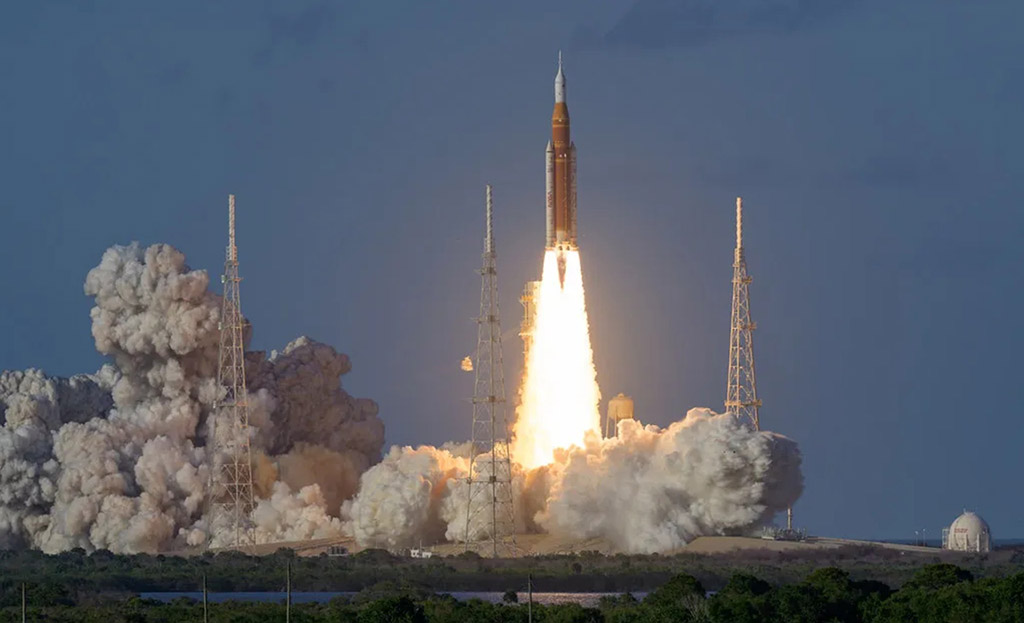
On April 1, 2026, NASA's Space Launch System lifted off from Kennedy Space Center carrying four astronauts into history. Reid Wiseman, Victor Glover, Christina Koch, and Canada's Jeremy Hansen are now aboard Integrity — the name the crew chose for their Orion spacecraft — on a ten-day lunar flyby mission, the first crewed deep-space flight in more than fifty years. The spectacle of that launch captured the world's attention. But the real story is everything happening behind the scenes: the cameras documenting every moment, the communications systems bridging a quarter-million miles of space, and the networks keeping this crew connected to Earth in real time.
This is a mission built on connectivity. And the technology making it possible is worth understanding.
Why Artemis II Matters More Than a Single Launch
Artemis II does not land on the Moon. That distinction belongs to Artemis III. What this mission does instead is arguably more important: it validates every system Orion needs to keep a crew alive, informed, and reachable during a deep-space transit with actual humans aboard.
Life support, avionics, navigation, communications, and abort procedures all get their first crewed workout here. The data and lessons collected over these ten days will directly shape the hardware, protocols, and infrastructure used for every lunar mission that follows, including eventual surface habitats, relay satellites, and the rovers that future astronauts will depend on.
The translunar injection burn was successfully completed on April 2, placing Integrity and her crew firmly on course. The lunar flyby is expected around April 6, with splashdown planned for April 10 in the Pacific Ocean near San Diego. At closest approach, the crew will pass approximately 4,100 miles above the lunar surface, close enough to observe large regions of the Moon's far side that no human has seen from this distance in over fifty years. The mission will also break Apollo 13's record for the farthest distance any humans have traveled from Earth.
Victor Glover is the first Black person, Christina Koch the first woman, and Jeremy Hansen the first non-American to travel to the lunar vicinity. As a crew of four, they also set a new record for the most people in deep space simultaneously, surpassing the three-person crew of Apollo 8 in 1968.
Apollo was about getting there. Artemis is about staying connected once we do.

The Cameras on Artemis II: Nikon, GoPro, and Mission Imaging Systems
Artemis II carries 28 integrated cameras aboard Orion, making it one of the most thoroughly documented crewed spaceflights ever attempted. Each camera serves a defined purpose, with no redundant or decorative hardware.
The engineering camera array includes:
- Four solar array wing cameras mounted on each solar panel, monitoring deployment and providing external views of the spacecraft.
- Three wireless in-cabin cameras and three external wired cameras covering crew activity and the spacecraft exterior continuously.
- Two human health monitoring cameras supporting biomedical research and procedure documentation throughout the mission.
- One forward-bay high-speed camera capturing dynamic events including launch ascent, staging events, and splashdown.
For handheld crew photography, NASA supplied two Nikon D5 digital SLR cameras paired with 14-24mm wide-angle and 80-400mm telephoto lenses. The D5 was selected for its low-noise sensor performance, wide dynamic range, and proven tolerance for radiation exposure in space environments. Still images and video from these cameras route through Orion's ZCube encoder, which compresses footage for downlink at resolutions up to 4K depending on available bandwidth.
NASA also partnered with National Geographic and Disney to document the mission. Four GoPro Hero 11 cameras are flying aboard specifically for a National Geographic documentary. Because downlink capacity is limited, that footage will be stored for post-mission release rather than transmitted live. The crew received training in visual storytelling before the mission, and custom mounts and audio equipment were built into the capsule to support documentary-quality production.
The result is a layered imaging ecosystem: engineering cameras protecting the spacecraft, health cameras monitoring the crew, Nikons capturing the science and scenery, and GoPros telling the human story. Every camera has a job, and every frame has a path home.
How Artemis II Sends Video and Data Back to Earth
Getting footage from 250,000 miles away requires more than a fast connection. It requires a purpose-built data architecture designed for reliability and priority management under real operational pressure.
Orion's internal network uses Time-Triggered Gigabit Ethernet, a deterministic networking standard that guarantees bandwidth to critical systems while sharing remaining capacity with video and science data. This technology moves information roughly 1,000 times faster than the networks used during the Space Shuttle program. Critical telemetry and command traffic get guaranteed delivery windows. Everything else fills in around it.
All of Orion's external communications, including voice, telemetry, video, and command uplink, run through a unified S-band radio system integrated with phased array antennas on both the crew module and the service module. This system consolidates the functionality of four separate radios into one unified platform and can simultaneously connect to NASA's Near Space Network, the Tracking and Data Relay Satellite system, and the Deep Space Network. The redundancy is intentional. If any one link degrades, the system routes around it.
Video compression and packaging for downlink is handled by the ZCube encoder, which multiplexes camera feeds with telemetry streams. Mission controllers in Houston can watch live crew activity and spacecraft system data in the same display, delivered in real time from a spacecraft currently en route to the Moon.
Think of it like a managed network with QoS policies: critical systems get reserved lanes, and everything else shares what's left.
The Laser-Communications Breakthrough on Artemis II
S-band radio has been NASA's workhorse for decades. It works. But it has limits, and those limits become a real operational constraint as missions push deeper into space and generate more data. Artemis II is testing the replacement.
The Orion Artemis II Optical Communications System, called O2O, uses an infrared laser to transmit data between the spacecraft and Earth. The hardware consists of a four-inch gimballed telescope, a modem, and a controller. Together they create what functions as a transparent Ethernet bridge between Orion and the ground, supporting file transfers, real-time video calls, and high-resolution image streaming.
The performance gap over S-band is significant. O2O's nominal downlink rate is 80 megabits per second, with burst capability reaching 260 Mbps. The uplink supports 20 Mbps. With just one hour of laser contact per day, O2O can return approximately 36 gigabytes of data compared to roughly 7 GB via S-band in the same window.
From an operations standpoint, O2O is fully integrated into Orion's avionics rather than treated as an isolated experiment. The Integrated Communications Officer at Mission Control can activate the optical payload before each pass, select video sources, and manage data flows through standard mission control interfaces. This is not a technology demo bolted on the side. It is built in.
Two dedicated ground stations support the laser link: one at White Sands Complex in New Mexico and one at Table Mountain in California. Both locations offer high elevation and dry climates that reduce atmospheric interference and improve link reliability.
How NASA's Networks Keep Orion Connected
No single antenna or ground station can maintain continuous contact with a spacecraft traveling to the Moon and back. Artemis II stays connected through a coordinated network of networks managed by NASA's Space Communications and Navigation Program.
From launch through low-Earth operations, Orion used the Near Space Network, a combination of ground stations and TDRS relay satellites that provided continuous coverage during the early phase of the mission. Now that the translunar injection burn is complete, responsibility has shifted to the Deep Space Network, which operates high-gain radio antennas at three sites: Goldstone in California, Madrid in Spain, and Canberra in Australia. The geographic spread of these stations ensures near-continuous coverage as Earth rotates and the spacecraft moves through its trajectory.
The networks are designed with overlapping coverage zones and multiple redundant paths. A single station going offline does not break the link. As the spacecraft rotates or lunar geometry temporarily blocks line-of-sight, network controllers shift coverage to another station or satellite without interruption. Apollo-era controllers managed this with minimal automation and significant operational risk. The modern SCaN infrastructure handles it systematically, and the payoff is continuous contact that supports real-time video, ongoing experiments, and constant crew accessibility.

Can Artemis II Astronauts Call Home?
Managing communications for a deep-space crew involves more than technical routing. It involves maintaining human connection across an extraordinary distance.
The combination of S-band links, the O2O laser system, and the SCaN network infrastructure supports real-time voice and video communication between the crew and Mission Control, with low enough latency for natural conversation at lunar distances. NASA has confirmed that private crew communications with family members are supported through secure links routed through the same network architecture that handles all other spacecraft communications.
Behind those calls is the Integrated Communications Officer at NASA's Mission Control Center in Houston. The INCO monitors every communications system aboard Orion, activates the optical payload, selects active video feeds, and ensures commands from Earth are reaching the spacecraft reliably. While the crew is having a conversation with their families, the INCO is watching the system health that makes it possible.
If the O2O demonstration performs as expected, future missions will support 4K video calls from the lunar surface. What currently feels like an extraordinary capability will become standard operating procedure for the crews that follow.
Artemis II Quick Facts
| Feature | Detail |
|---|---|
| Mission Type | Crewed lunar flyby (free-return trajectory) |
| Launch Date | April 1, 2026, 6:35 p.m. EDT |
| Spacecraft Name | Integrity (named by the crew, September 2025) |
| Mission Duration | Approximately 10 days |
| Lunar Flyby | Expected April 6, 2026 (~4,100 miles above the surface) |
| Splashdown | Expected April 10, 2026, Pacific Ocean near San Diego |
| Launch Vehicle | Space Launch System (SLS) |
| Total Cameras | 28 integrated plus handheld Nikons and GoPros |
| Primary Comm Systems | S-band radio, O2O laser payload, phased array antennas |
| Laser Downlink Rate | 80 Mbps nominal, up to 260 Mbps burst |
| Laser Uplink Rate | 20 Mbps |
| Ground Networks | Near Space Network (launch through TLI), Deep Space Network (trans-lunar cruise and return) |
| Commander | Reid Wiseman (NASA) |
| Pilot | Victor Glover (NASA) — first Black person to travel to the lunar vicinity |
| Mission Specialist | Christina Koch (NASA) — first woman to travel to the lunar vicinity |
| Mission Specialist | Jeremy Hansen (CSA) — first non-American to travel to the lunar vicinity |
Building the Network for the Future of Lunar Exploration
Artemis II is a proof of concept for something larger than a single mission. It validates that a modern spacecraft can maintain continuous contact across a quarter-million miles, that laser communications can deliver broadband-class data rates from deep space, and that human crews can remain operationally and personally connected to Earth while traveling to the Moon.
The technologies being tested on this flight, from the 28-camera imaging system to the O2O optical payload to the layered SCaN network architecture, will form the foundation of every mission that follows. Artemis III will land astronauts near the lunar south pole. Future missions will deploy rovers, build surface infrastructure, and eventually support permanent habitation. All of it depends on connectivity, and Artemis II is where that connectivity gets proven.
When those future crews send 4K video from the lunar surface, route data from scientific instruments to researchers on Earth, and video call their families from 240,000 miles away, they will be building on what Integrity and her crew established.
The Moon is not just a destination. It is becoming part of the network.
Sources: NASA mission press releases, the Orion Reference Guide, the Optical Communications Operation Concept for the Orion Artemis II Mission, NASA's Space Communications and Navigation Program documentation, the Orion Imaging Capabilities technical presentation, Lockheed Martin Artemis II mission summary, NASA Astronomy Picture of the Day (April 2, 2026), Scientific American, CBS News, NBC News, and Al Jazeera Science. All NASA images are in the public domain.